

Quality Control
Quality checks begin with a clear specification
A useful inspection basis identifies what matters for the product, application, surface, dimensions, packing, and shipment before the order is prepared.
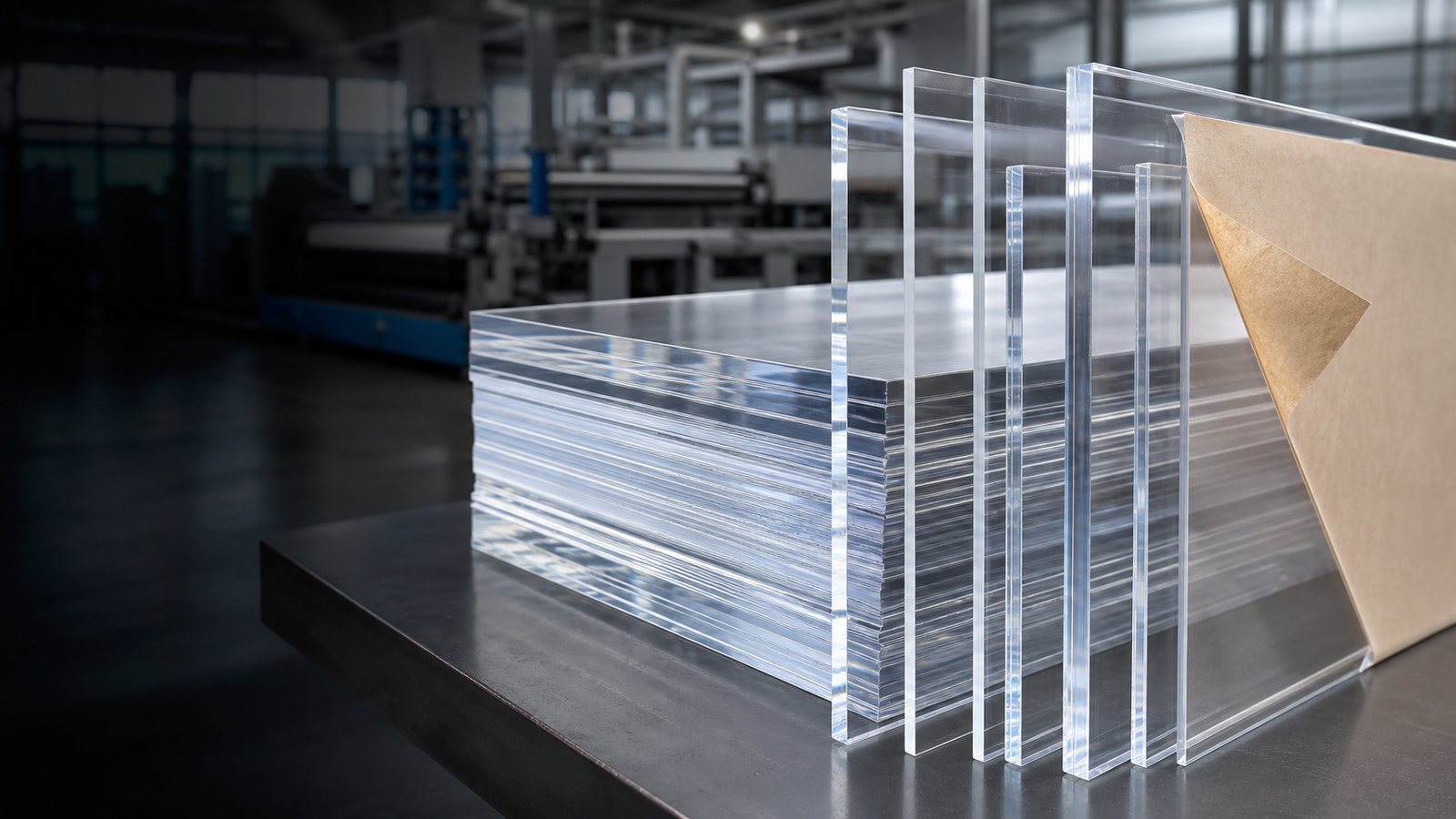
Inspection basis01 02 03
Check the characteristics the buyer will actually use
Inspection priorities change between clear, frosted, and colored material. The purchase specification should identify the points that affect acceptance.
Identity and dimensions
Product type, color or finish, length, width, thickness, and quantity.
Visible condition
Surface appearance, protective film, edge condition, and handling marks.
Packing condition
Separation, edge protection, pallet method, wrapping, and shipment labels.
Product-specific review
Different finishes create different inspection priorities
The table is a commercial checklist, not a published acceptance standard. Final tolerances and methods should be confirmed for each order.
| Product | Visual focus | Specification focus | Packing focus |
|---|---|---|---|
| Clear acrylic | Clarity and visible surface | Dimensions, thickness, finish | Film and surface protection |
| Frosted acrylic | Diffusion and frost appearance | Surface direction and application | Finish protection and separation |
| Colored acrylic | Color and opacity consistency | Color reference and light behavior | Identification and protected packing |
Buyer checklist
Make acceptance requirements visible before pricing
Specific requirements are easier to review when they are attached to the RFQ rather than introduced after production.
State the tolerance
Include required dimensional or thickness tolerance when it is critical.
Describe the surface
Use finish names, visual references, or application context where relevant.
Define the pack
Confirm quantity per pack, protection, labeling, destination, and handling needs.
Quality-aware RFQ
Prepare Your RFQPut critical acceptance points into the inquiry
Send the product, specification, tolerance, visual requirement, packing, quantity, and destination.